Why I'm keeping this teardown
This is a reverse-planning exercise. Start from a live product and work backward to infer customer value, business model, core flows, and likely metrics, then propose improvements. The subject is Tinder, a social-discovery app operated by Match Group. The goal of this exercise was to organize where metrics attach in a flow and what they can tell us.
1. Service overview
Tinder is a social-discovery app.
- Operator: Match Group
- Launched: 2012
- CEO: Renate Nyborg (Sept 2021–)
- Core users: ages 18–25 (Gen Z)
The vision is "The best way to discover friends, Tinder." The brand film reflects a Gen Z value system built around one's own tastes and interests.
Qu Zhao, Head of Tinder East Asia, put it this way. "Like the fresh pairing of Tinder and actor Shin Goo, we wanted to show that in a new-normal era Tinder can connect you with all kinds of people, whether a neighbor you grab coffee with or a career mentor."
2. Strategy & customer value
The strategy is game-like, intuitive interaction paired with paid items that actively nudge matches. The core value is "finding friends easily and playfully." An algorithm recommends people that fit your profile and settings.
2.1 Profile — card-stack swiping
- An intuitive UI: swipe the card stack to pick 'Nope', 'Super Like', or 'Like'
- Minimal actions, so finding friends is fast and easy
2.2 Vibes — time-boxed prompts
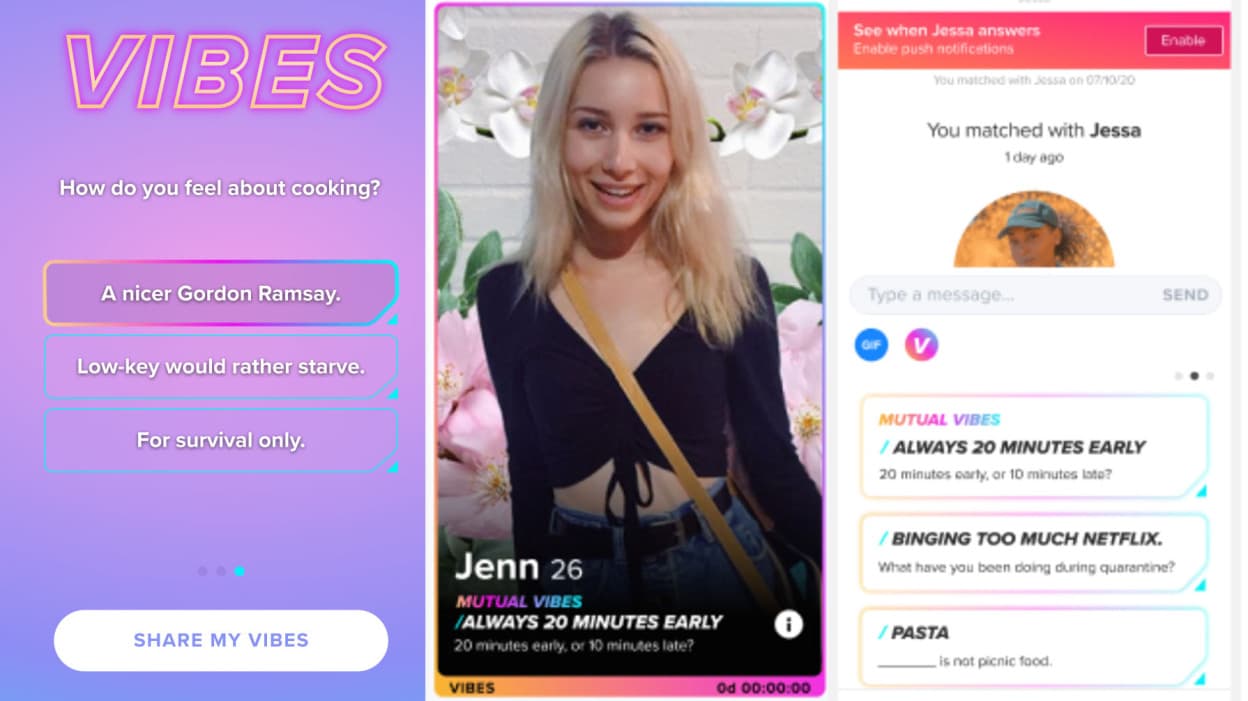
- A continuous event that grows in effect when people participate together
- An answer given within 48 hours is shown above the profile name for 72 hours
- Under a time limit, people see how others chose in the same situation, which turns shared empathy into matches and conversation
2.3 Swipe Night — interactive story
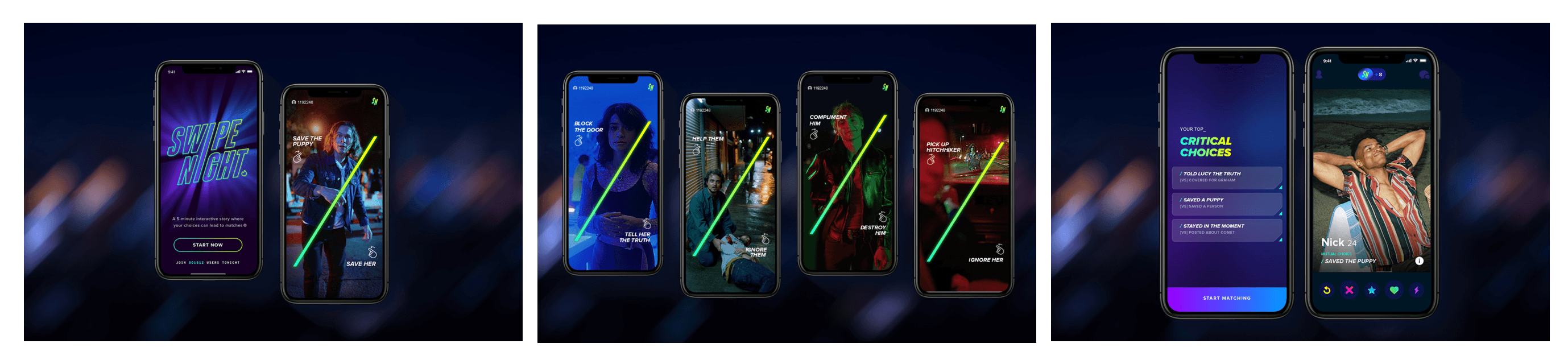
- First-person in-app interactive content: choose within 7 seconds via left/right swipe, and the story branches
- Under limited watch time and views, comparing each other's choices drives empathy-based matches
- A Tinder-original content experience, much like Netflix's interactive originals
2.4 Process
The process runs match → chat → meet. Fill out a profile and set the range of who you're looking for, and the algorithm recommends fitting users. When two people exchange 'Like' or 'Super Like', chat is unlocked.
3. Business model
Tinder runs a brokerage-style platform, monetized through subscriptions and consumable items.
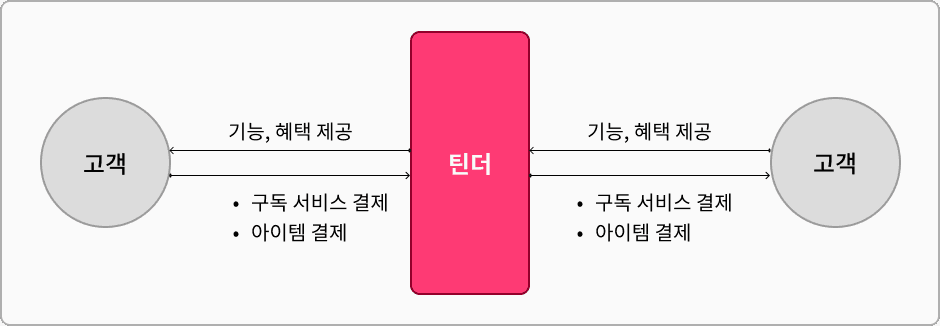
- Subscriptions come in three tiers, 'Tinder Plus / Gold / Platinum', with tiered benefits. Each tier caps how often match-critical features can be used.
- Item sales cover Super Like, Boost, and Super Boost. Once the tier's usage cap is hit, users buy activation items, an upsell timed to the moment desire peaks.
4. Flows & estimated metrics
The flow is simple and fits the target and the vision. For each flow I attach the metrics the team is likely watching.
4.1 Match
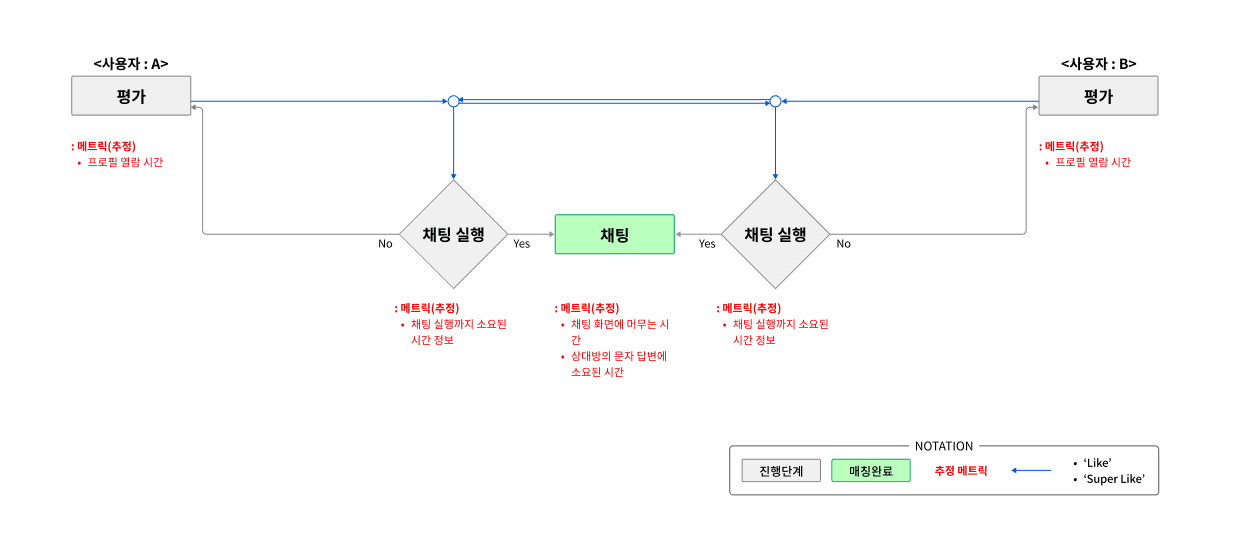
A mutual Like/Super Like creates a match and unlocks chat.
Estimated metrics: profile rating outcome, profile view time, time-to-first-chat, time spent on the chat screen, and time to reply.
4.2 Vibes
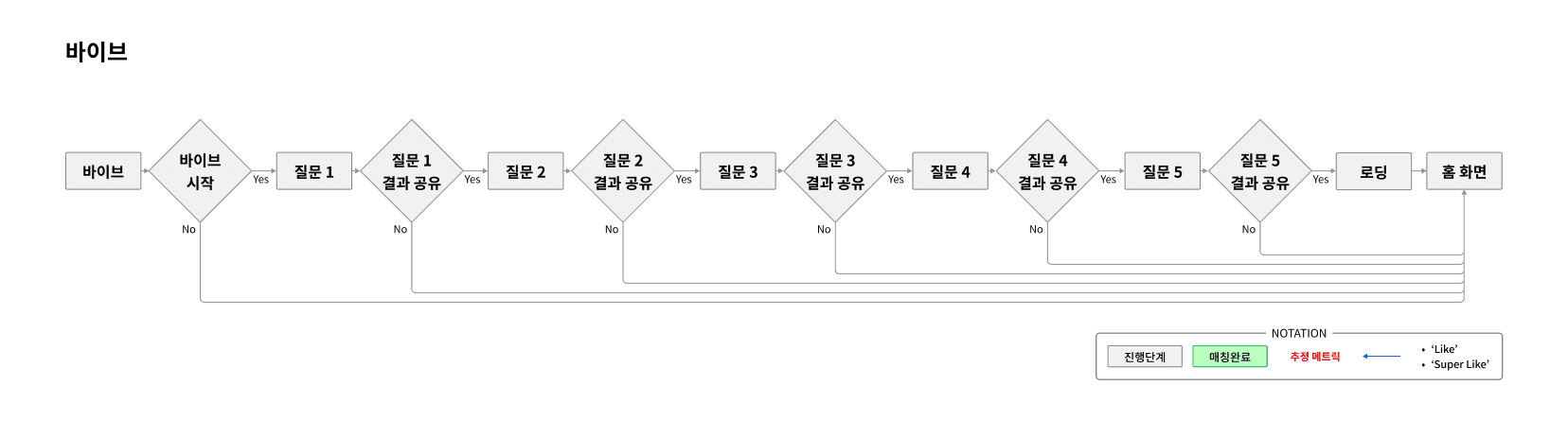
A continuous event with push notifications when it rolls out locally and on app open. Answer prompts and check whether others empathize over 72 hours. Once matched, review each other's vibes in chat.
Estimated metrics: choice time, choice outcome, participation time, completion, drop-off step and time, and related chat volume after finishing.
4.3 Swipe Night
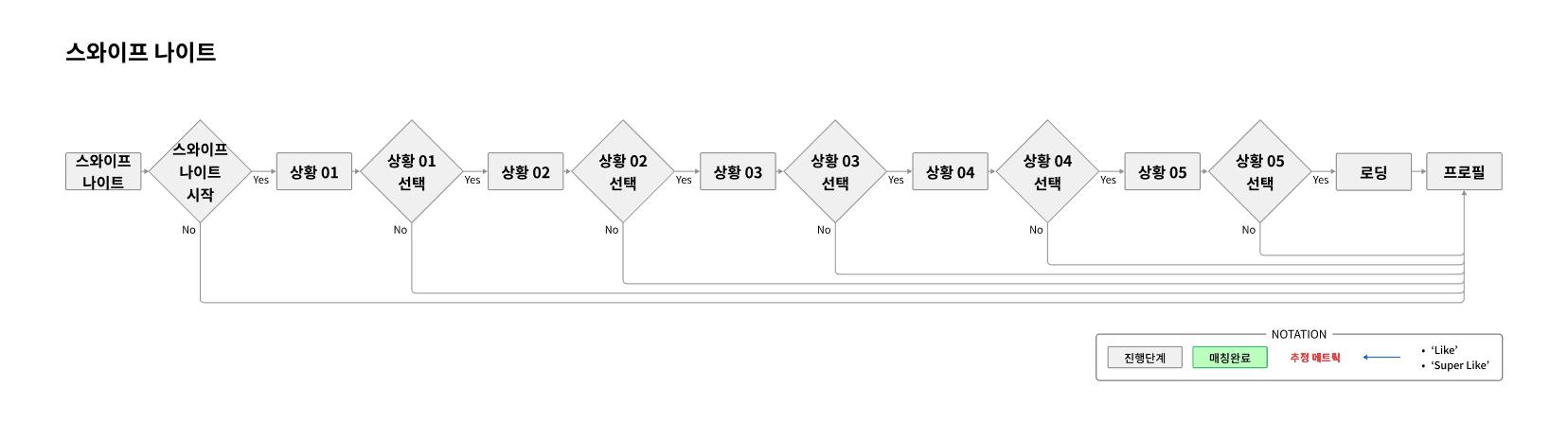
Three 7-minute episodes release over three weeks. In-story choices within 7 seconds branch into 8 endings, and choices are added to the profile.
Estimated metrics: choice time, choice outcome, completion, drop-off time, watch time, and related chat volume after finishing.
5. UI structure
The screens are composed to reflect the target audience's culture.
5.1 Profile
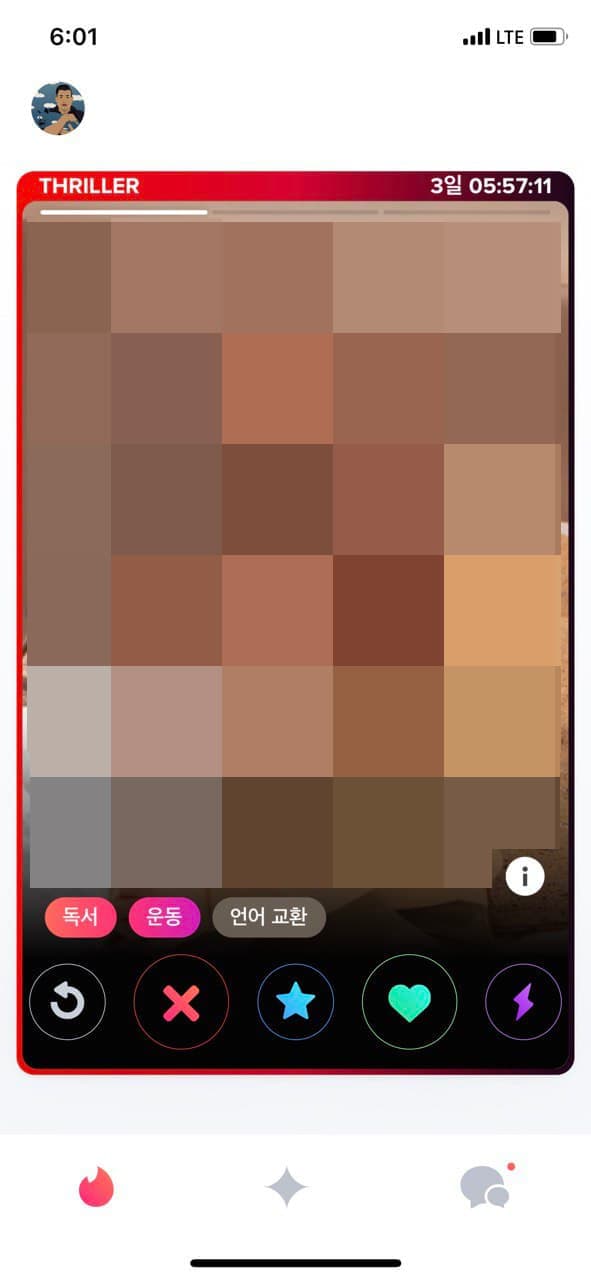
- Photos allow up to 9 photos/videos. The recent 'profile video' feature embraces Gen Z's short-form habits. It is likely to evolve toward a TikTok/Instagram-style short-form format.
- Interests are kept simple (max 5). They are easy to fill in but possibly thin for precise matching. Interactive content such as Vibes and Swipe Night supplements that connection.
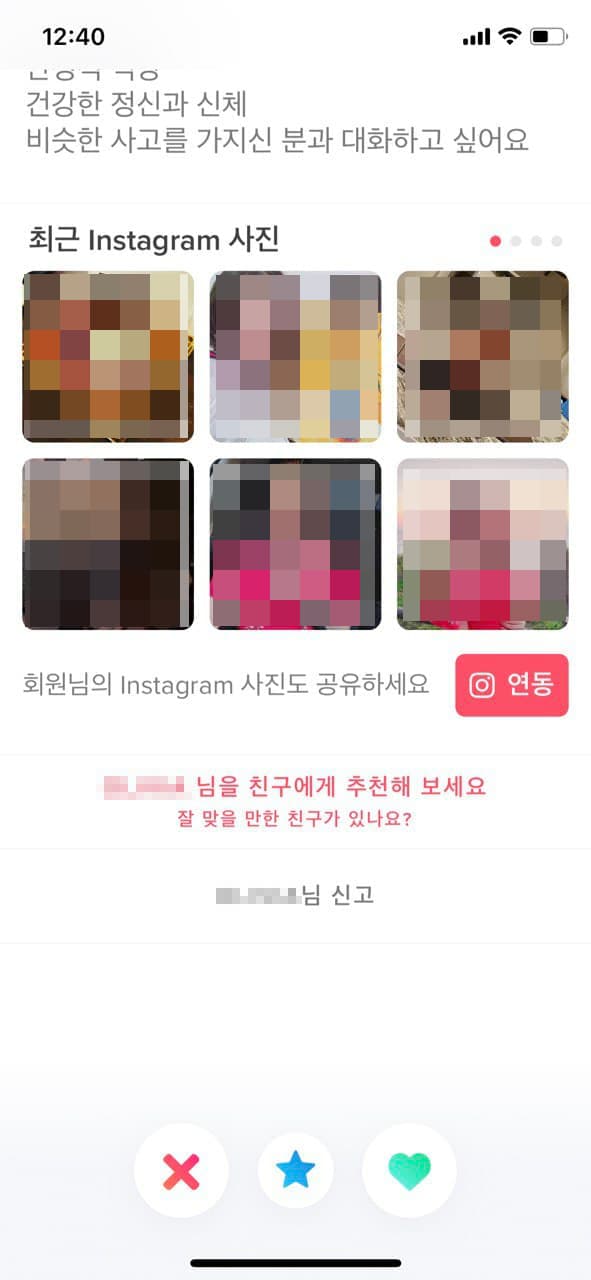
- Recent Instagram photos appear inside Tinder through account linking. This is likely a move to stop users who wrote their Instagram ID in the bio from leaking out of the app.
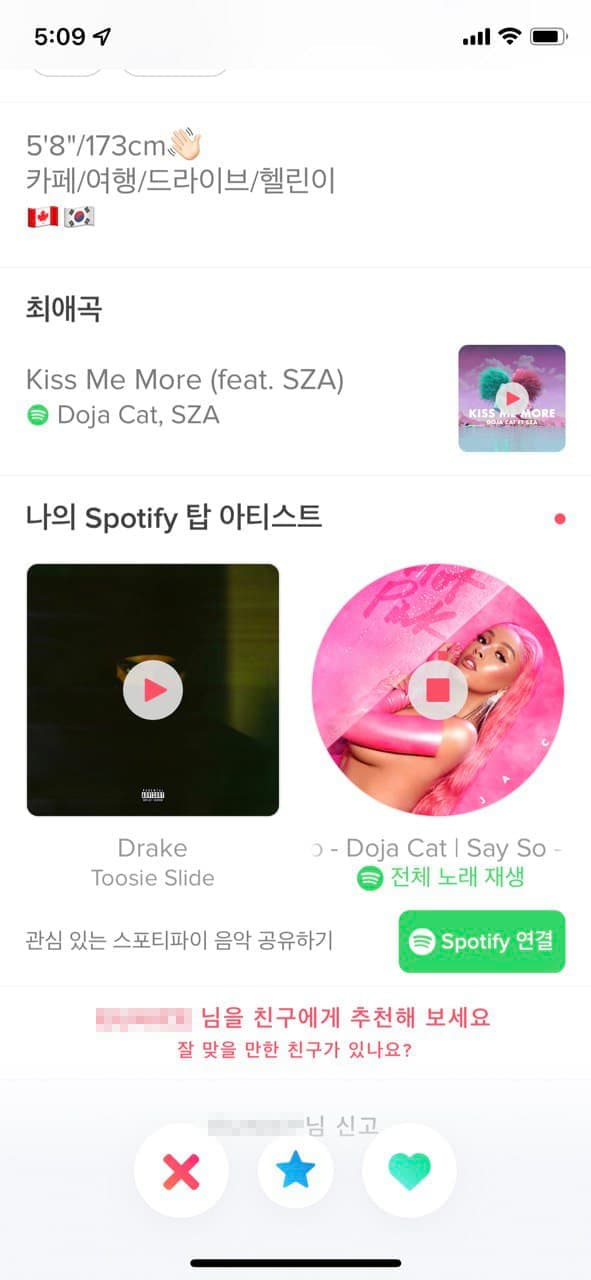
- Anthem / Spotify Top Artists show your Spotify music on the profile (30-sec preview). This likely borrows the reach of the world's largest streaming platform and uses music as a taste signal.
5.2 Vibes
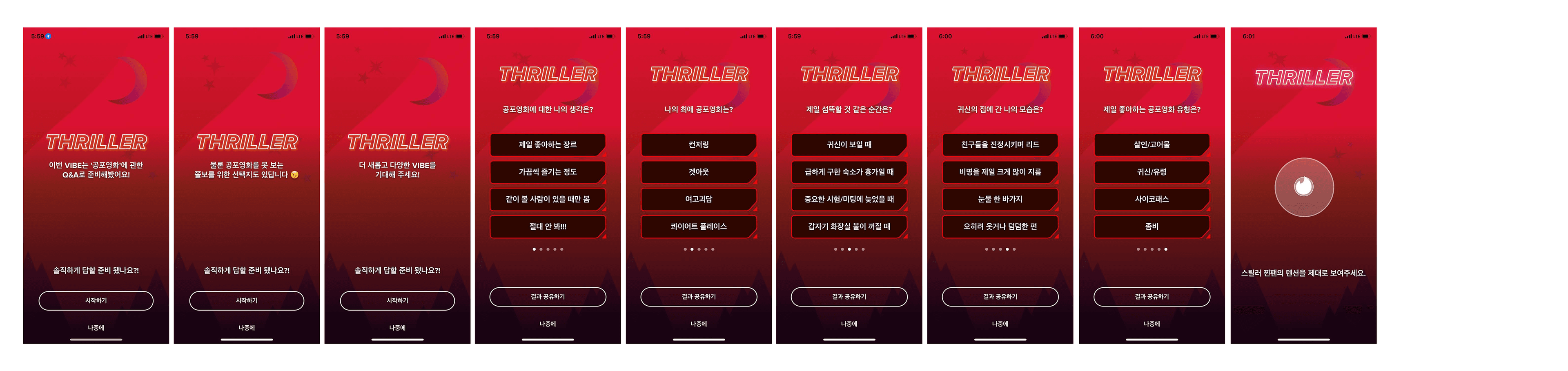
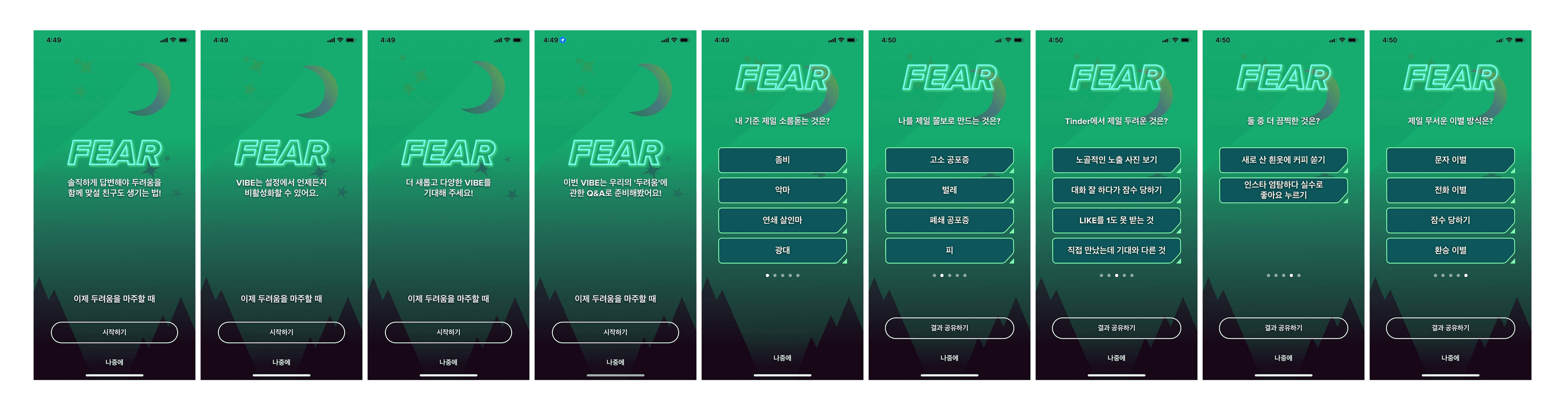
Pick one from a few options and proceed with a slide interaction similar to profile rating. To avoid pressure, 'Later' and 'Share result' buttons appear on every screen.
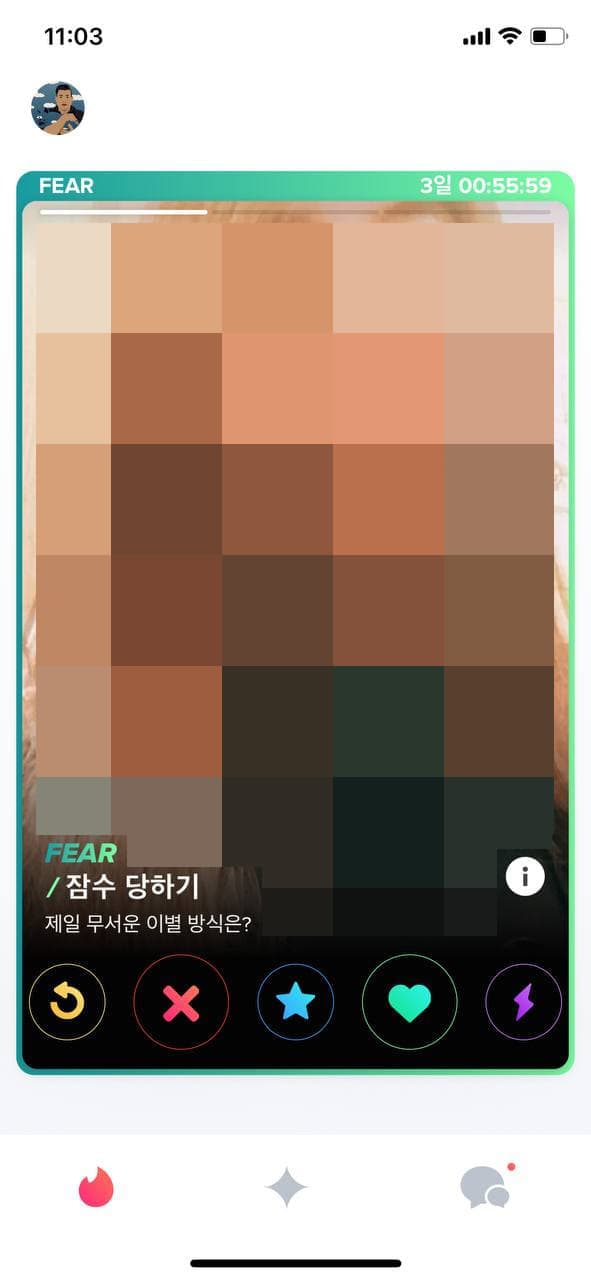
Once shared, the topic and choice appear above the profile name for 72 hours.
5.3 Swipe Night
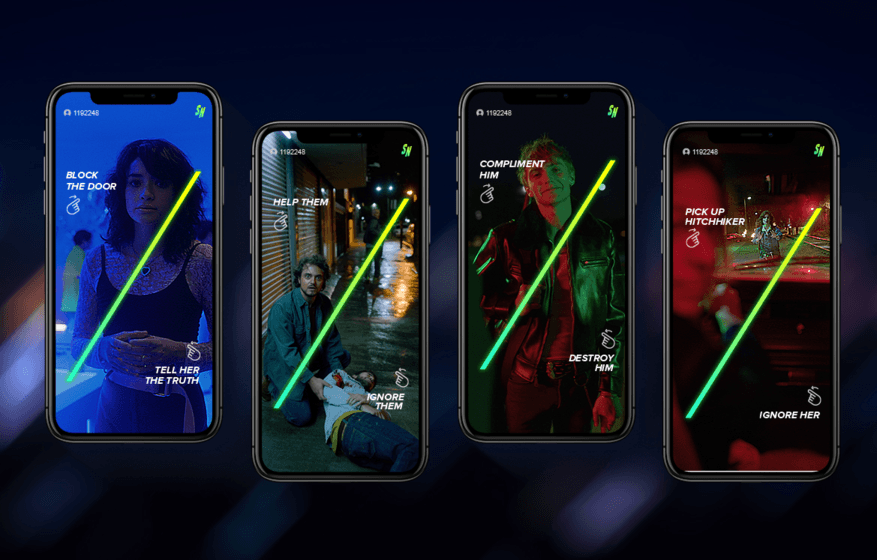
Swipe left or right and the result is reflected in the content immediately. The short, fast tempo raises immersion.
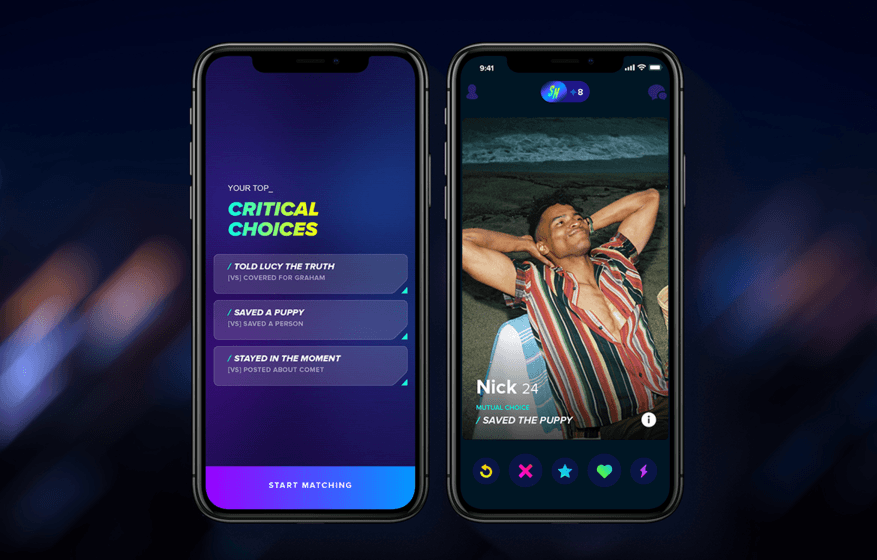
When shared, the topic and choice appear above the profile name for 72 hours.
6. Question 1 — Why do negative reviews persist?
Despite a target-fit strategy and business model, app-store reviews keep surfacing complaints. The common thread is a profile-trust problem, with reports of crime as well.
- Reviews reporting harm from requests for a different kind of meeting than the profile implied
- Reviews reporting a different person showing up at the actual meeting than the profile showed
- Reviews reporting cyber-crime harm in post-match chat
Next steps planned: WOM analysis, a survey of 2 users who failed to match, and an in-depth interview (IDI) with 1 survey participant. Selection and results are organized in follow-up work.
7. Tinder's response
Tinder tries to repair brand image through a leadership change and a verification feature.
- The CEO was replaced with a woman. I read this as a signal of intent to improve brand image.
- Advertising casts grandfluencer actor Shin Goo to endorse Gen Z's choices.
- A profile verification feature was introduced.
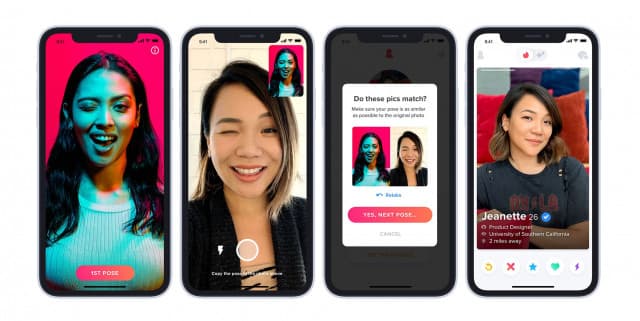
AI verifies that the profile photo and the actual user are the same person, adding a verification mark to the right of the name.
8. Question 2 — Will the current fixes work?
The direction is right, but the impact is doubtful. These fixes may not be enough to make someone choose Tinder wholeheartedly.

- Brand ads that contrast with the negative image already imprinted on existing users may backfire.
- Profile verification only confirms outward resemblance between face and profile. Understanding a person's actual disposition remains limited.
9. My proposals
9.1 Match rate — drive matches via recommendation accuracy
Encourage richer profile input to raise recommendation accuracy, and visualize profile completeness with a graph and a percentage.
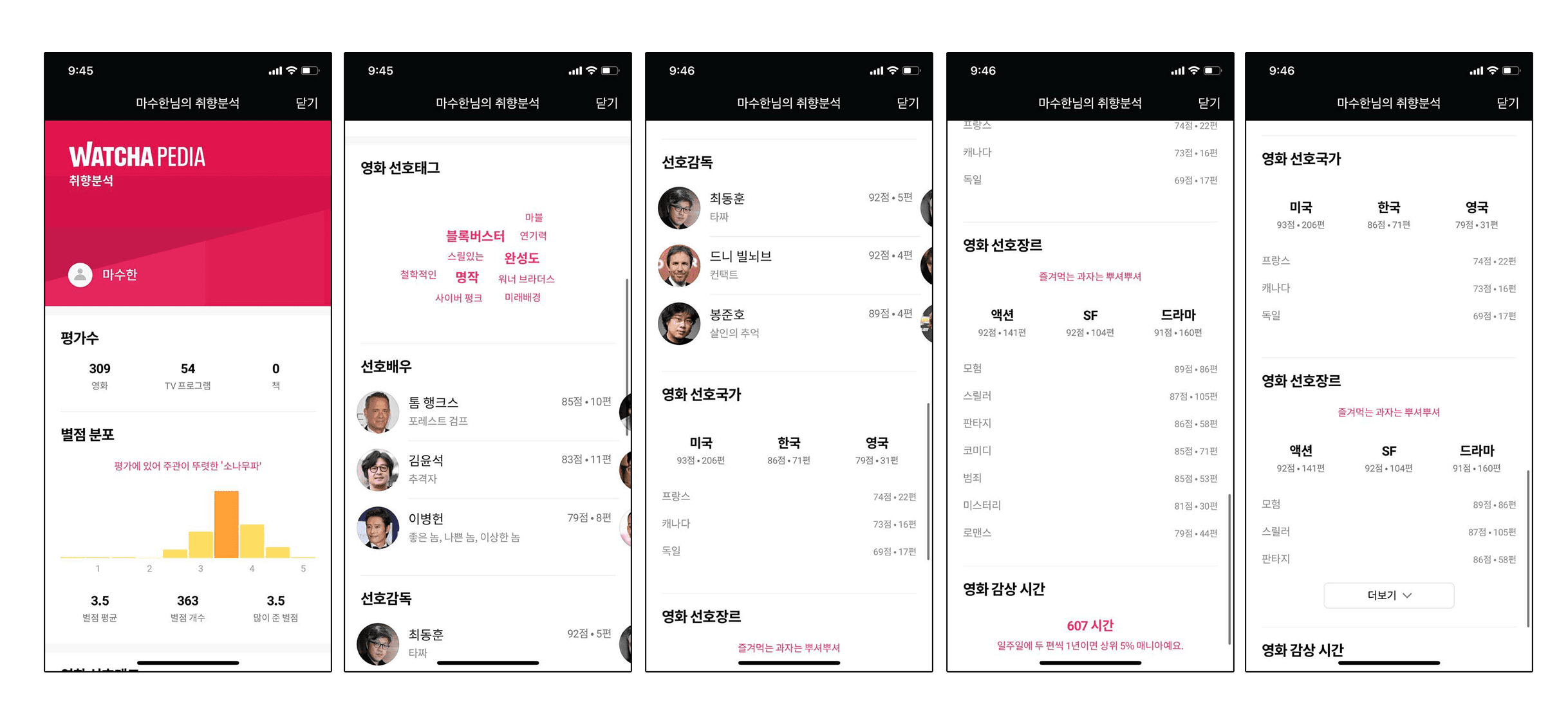
- Watcha Pedia learns content taste through many choices to raise recommendation accuracy. It breaks taste down by component.
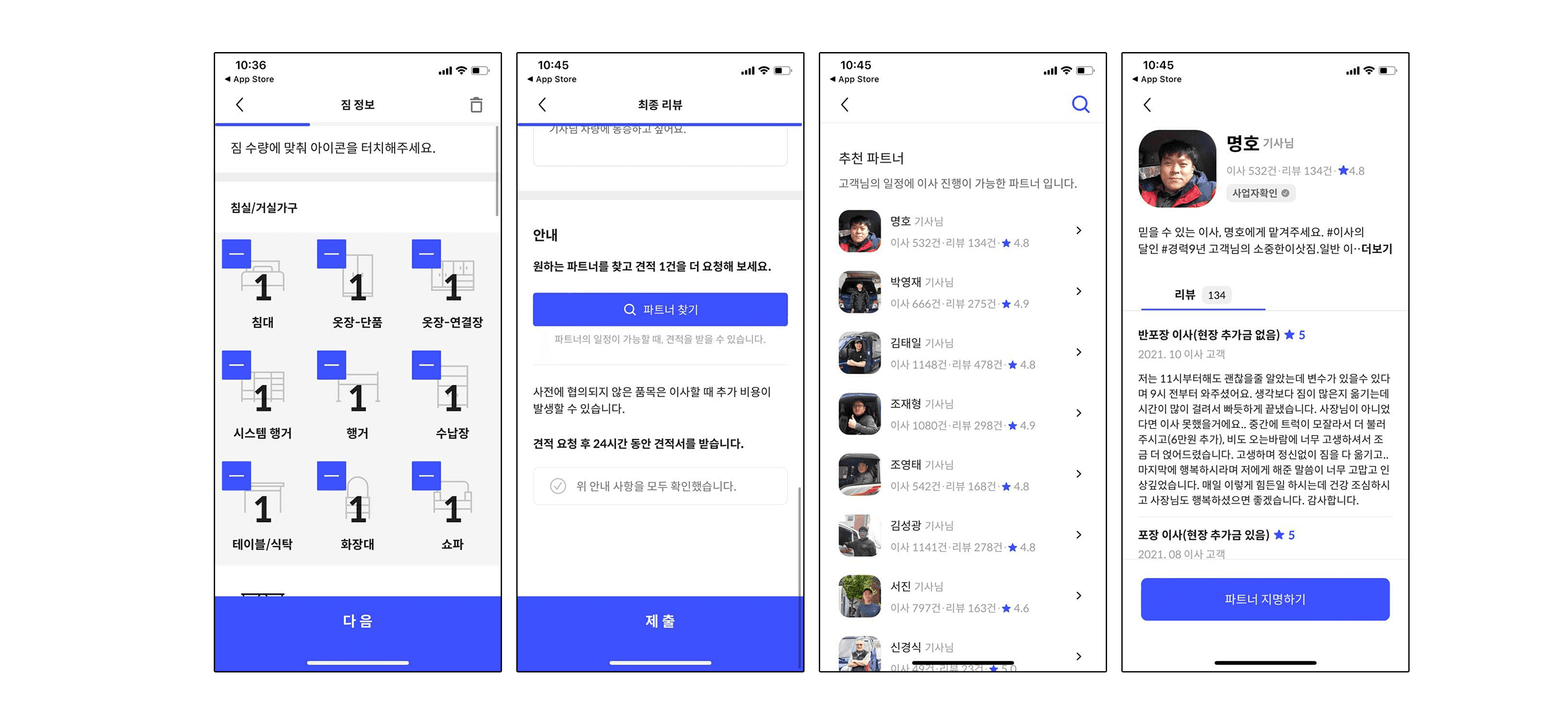
- Zimssa uses detailed category breakdowns to collect precise input and match fitting partners.
The proposal is to make 'interests' richer. For example, film would list favorite actors and genres, exercise a Nike Run Club 10km finish, and books a favorite reading list. That taste data raises accuracy and lands more precise matches.
9.2 Business model — from finding friends to meeting
Secure revenue stability with benefits that let matched pairs keep meeting as friends or partners. For example, 'Tinder Friends Platinum' and 'Tinder Couple Platinum' subscriptions would offer perks on dining and venue booking. Tinder would also support reservations at venues it recommends and verifies.
10. Closing
Key point
Above all, I sorted out where metrics attach in a flow and what they can and cannot tell us.